

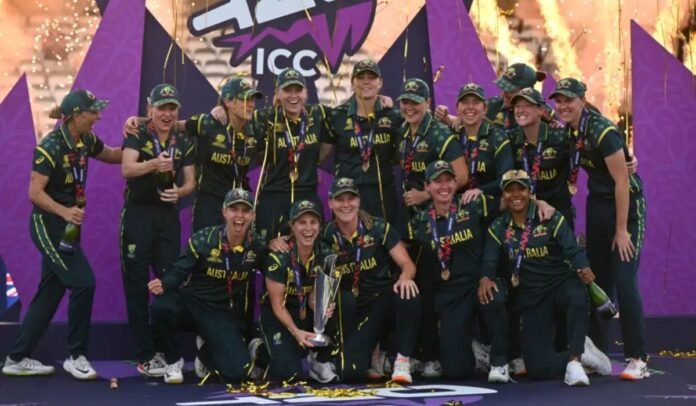
Australia returned to the top of women’s T20 cricket by defeating England in the ICC Women’s T20 World Cup 2026 final at Lord’s, securing a comfortable victory to claim their record-extending seventh title. The Australians had been defeated in the last two ICC tournaments, but responded with a standing and all-round performance to claim the silverware in front of an almost-full ground.
Beth Mooney underpinned a successful pursuit with another outstanding innings, her unbeaten half-century in a T20 World Cup final now the third time she’s reached fifty to guide Australia home. Batting second, Australia chased the 151 in style with 17 balls to spare, illustrating once again just how they have established their dominance on the grandest stage.
Coming into the final, England had plenty of experience to draw upon for their quest to improve on a remarkable trend at home World Cups – they had won every Women’s World Cup hosted by England. On the other hand, Australia had never lost a World Cup final to England and this record remained locked after another dominant performance.
England captain Nat Sciver-Brunt opted to bat having won the toss but Australia’s well-disciplined bowling attack made sure the home side never truly seized control of their innings. Defending their low total, Australia got off to a dream start when Lucy Hamilton claimed an early wicket in the powerplay getting rid of Amy Jones.
Sciver-Brunt steadied the ship with a sensible knock, but at no particular stage did Australia’s bowlers ever allow them to build momentum. Danni Wyatt-Hodge, England’s leading run-scorer of the tournament was out nicking one behind to Beth Mooney, who took a sharp catch which was confirmed by the Decision Review System.
Australia bowled tightly in the powerplay and England found themselves at 39 for 2 at that stage. Alice Capsey initially wrestled back some momentum with a burst of boundaries in an assault on Ash Gardner including the first six of the match before her innings ended when she was bowled reverse sweeping by Molineux.
Heather Knight also went cheaply, leaving Sciver-Brunt to rebuild alongside Freya Kemp. They were the best partnership of the innings for Englands, an unbroken 80 for the fifth wicket. Sciver-Brunt led the innings from one end with a stoic fifty for 50 while Kemp finished it off splendidly exploding to an unbeaten 44 in the last overs. With their partnership, England comfortably posted a score of 150 after being down and out at one stage of the innings.
Australia’s reply began with intent as both 7and 8 fell early for England. It was a near opening-over disaster for the White Ferns as they reviewed an lbw decision only for it to be overturned, with Charlie Dean almost having Georgia Voll removed first ball. Voll who was finally dismissed by Lauren Bell (3-53) but not before costing the over very heavily as they released many extras and boundaries.
Once the early wicket was lost, Phoebe Litchfield and Beth Mooney monopolised the match. In her first World Cup final, Litchfield batted unbelievably fearlessly hitting multiple elegant boundaries and a monumental six and rotating the strike to put England in charge of the innings. Mooney was on slow prior to pushing the pedal, for giving back alarming distributor points nevertheless keeping Australia ahead of the number.
In the 10-over powerplay, Australia had raced to 62 for 1, which put a lot of pressure on England’s bowlers. Having put their heads down, the batting at the other end flourished as they took aggressive stroke play on with a running between wickets smartly.
With the wicket of Litchfield, who scored a fine 48, she had ended their brilliant run partnership of 100 from just 107 balls. It was too late though, with Australia having all but wrapped up the result by then. It was not long before Mooney delivered another match-winning fifty again showcasing why she is still one of the best in providing ICC final performances.
While England snared a couple of wickets in the closing overs, Australia’s packed batting order finished the job with nearly three overs to spare for another World Cup title.
It also kept up Australia’s perfect T20 World Cup final record. They have won all seven finals they have reached, consolidating their place as the most successful side in the tournament’s history.
Once again it was Beth Mooney stepping up, yet another calm and ultimately match-winning knock. While her 135 runs in just her first World Cup final made a strong case for Australia’s bright future, it was the fearless contributions from Phoebe Litchfield that did so as well.
Nat Sciver-Brunt starred for England with her fighting fifty at the top of the order and, after a tough time early on, the home side were given hope by an explosive finish from Freya Kemp. That said, the Australian bowling, fielding and batting depth finally proved a bridge too far.
It was this result that ended a run of two consecutive tournament disappointments and saw Australia return to ICC glory to underline their status at the top of the women’s game. Claiming a seventh Women’s T20 World Cup title on the hallowed turf of Lord’s makes an already storied legacy all the more remarkable.

